Step by step
Choose one change first
Decide whether you are changing length, width, sleeve style, color, yarn, or edging. One clear change is easier to control than many at once.
Check: You can describe the exact change in one sentence.
Find what the change affects
A longer body affects yardage. A wider panel affects stitch counts. A yarn swap affects gauge, drape, and blocking.
Check: You know the parts of the pattern that may need recalculation.
Keep stitch multiples intact
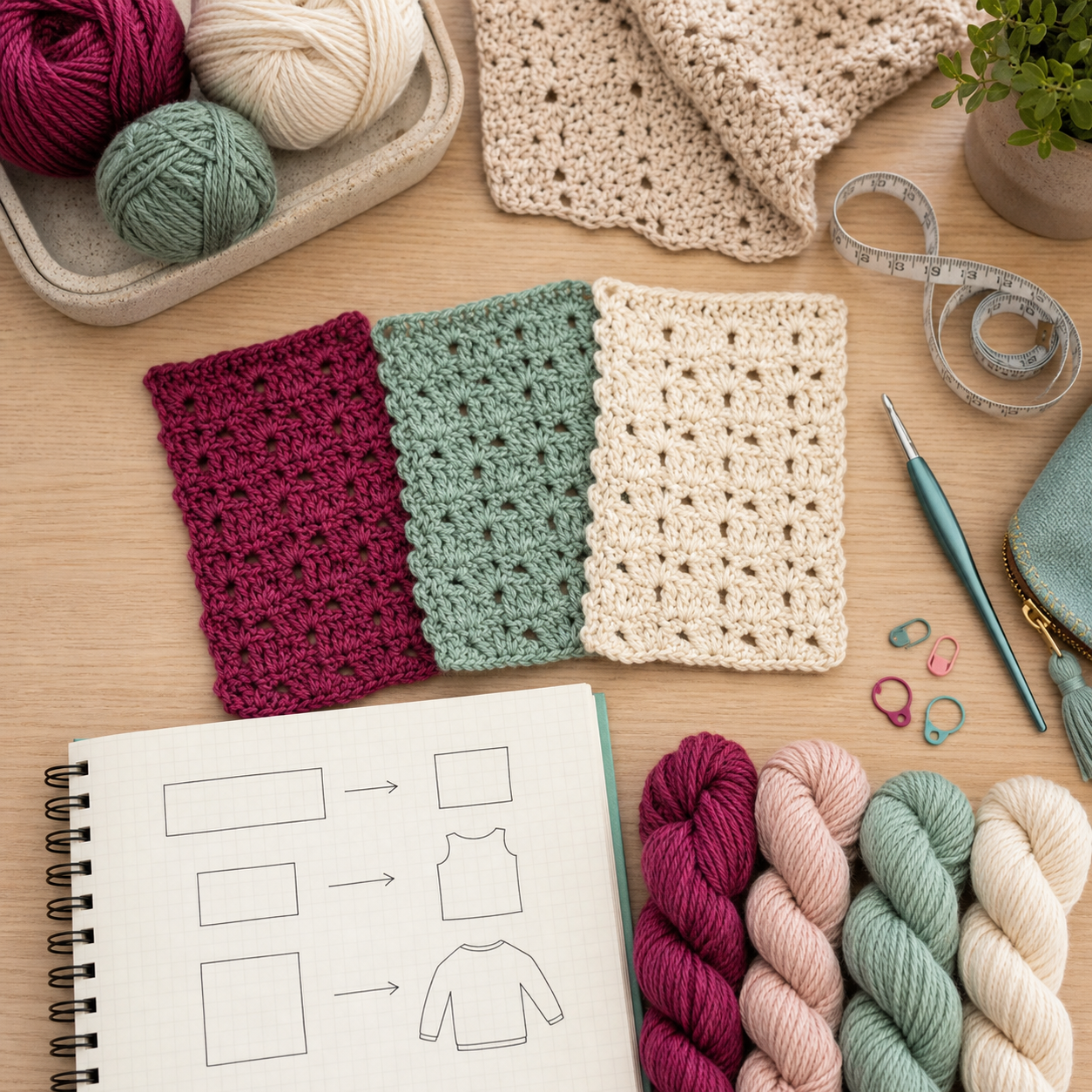
Many stitch patterns need a specific multiple, such as multiples of 4 plus 2. Preserve that math when adding or removing stitches.
Check: Your new stitch count still works with the stitch repeat.
Estimate extra yarn
Any size, length, or texture change can use more yarn. Add a buffer before starting, especially when matching dye lots matters.
Check: You have enough yarn or a clear plan if more is needed.
Write changes as you go
Record hook size, stitch counts, row counts, and altered steps. Your notes make the second sleeve, second panel, or future repeat possible.
Check: Your customization notes are clear enough to repeat later.
Practice
- Pick one beginner or intermediate pattern and add two inches of length on paper.
- Calculate the new row count using your row gauge.
- Write a short note explaining yarn, fit, and finishing effects.
Common mistakes
The stitch pattern no longer lines up.
Check the stitch multiple before changing the starting chain or panel width.
You run out of yarn.
Estimate yardage after the change and add a realistic buffer.
You forget what you changed.
Write notes while crocheting, not after the project is finished.