Step by step
Measure your body honestly
Measure the body points the pattern uses, such as bust, chest, upper arm, waist, hip, or shoulder width. Keep the tape level and relaxed.
Check: You have current measurements written down before choosing a size.
Compare finished measurements
Look for the pattern's finished garment measurements. These show the actual size of the crocheted piece, which may be different from the body size label.
Check: You know the finished measurement for the area where fit matters most.
Decide the ease you want
Ease is the space between your body and the garment. Negative ease hugs, zero ease skims, and positive ease feels relaxed.
Check: You can explain whether this project should fit close, regular, or oversized.
Use gauge before committing
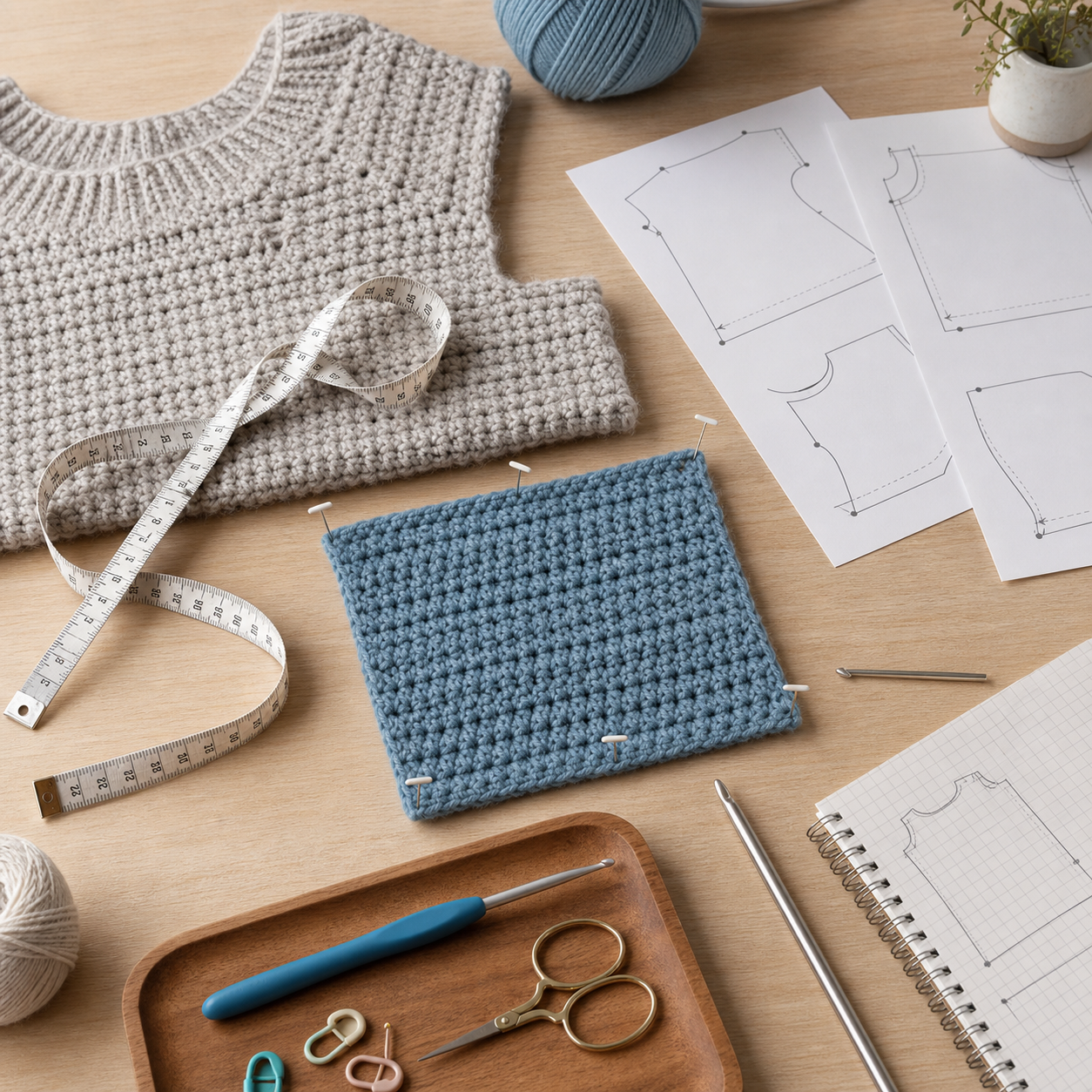
Make and measure a swatch in the main stitch pattern. Even a small gauge difference can change the finished width by several inches.
Check: Your stitch gauge is close enough, or you know which hook change to try.
Plan adjustment points
Before starting, mark where length, sleeve, neckline, or body width changes can happen cleanly. Controlled changes are easier than fixing fit at the end.
Check: You know which parts you will follow exactly and which parts may need adjustment.
Practice
- Measure a favorite sweater and compare it to your body measurement.
- Write the amount of ease at the bust or chest.
- Make a gauge swatch and calculate how much 1 extra stitch per 4 inches would change the finished width.
Common mistakes
You choose only by the size name.
Use finished measurements instead of relying on small, medium, or large labels.
The garment grows after blocking.
Block your gauge swatch the same way you will block the final garment.
The bust fits but the sleeves do not.
Check multiple fit points, especially upper arm and shoulder measurements.